Architectural Metalwork Nottingham
Custom Metal Balustrades, Façade Panels, Screens, Grilles & Building Features
Architectural Metalwork
Nottingham Metalworks fabricates bespoke architectural metalwork for commercial and residential developments across Nottingham and Nottinghamshire. From balustrades and screens to façade panels and ventilation grilles, our precision CNC plasma metal cutting and professional installation deliver architectural metalwork that enhances buildings with function, beauty, and lasting quality.
Precision-Fabricated Architectural Metalwork
Contemporary architecture increasingly embraces metal as an expressive material. Architectural metalwork adds texture, controls light, creates privacy, enhances energy efficiency, and defines building character. From subtle functional elements to bold design statements, quality metal fabrication transforms architectural concepts into built reality.
At Nottingham Metalworks, we specialise in fabricating architectural metalwork for architects, developers, contractors, and discerning homeowners across Nottingham and Nottinghamshire. Our sheet metal fabrication capabilities translate architectural drawings into precisely manufactured components that integrate seamlessly with modern building methods.
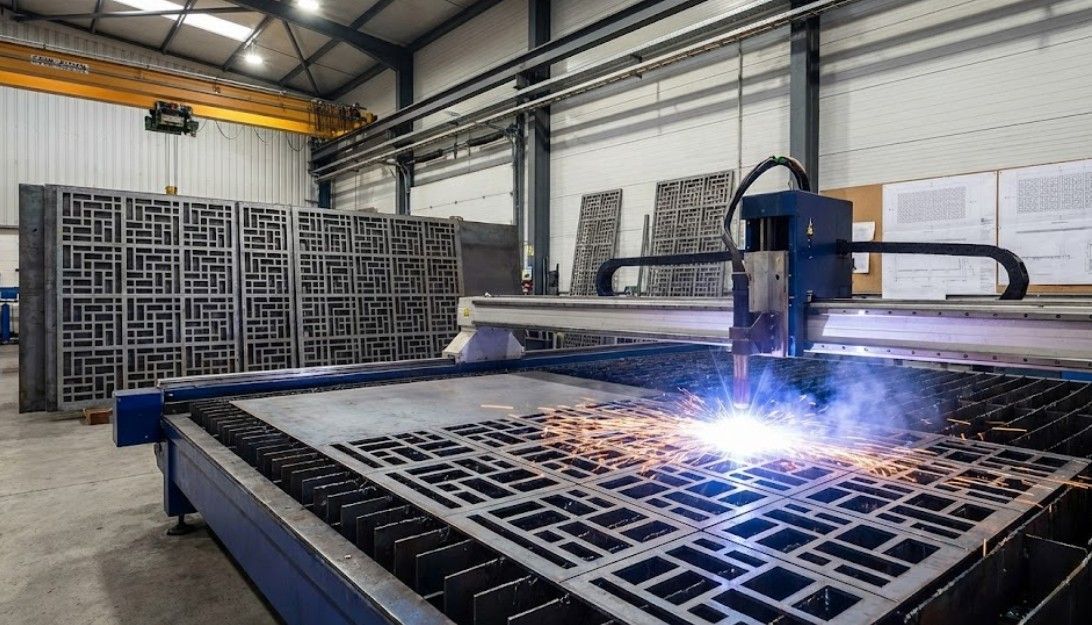
CNC plasma cutting technology enables complex architectural patterns previously achievable only through expensive laser cutting or water jet processes. Geometric screens, organic perforated panels, intricate balustrade infills, and detailed ventilation grilles—all are manufacturable at architectural scale with the precision contemporary building standards demand. We understand architects' requirements. Metalwork must meet building regulations, coordinate with multiple trades, withstand environmental exposure, maintain appearance, and deliver on aesthetic intent.
Our experience spanning
decorative metalwork through
precision engineering components means we approach architectural projects with both creative understanding and technical rigour. Commercial developers, residential builders, architects specifying metalwork, shopfront contractors, and homeowners undertaking architectural projects work with us to manufacture metal building elements that elevate architectural quality whilst meeting practical performance requirements.
ARCHITECTURAL METALWORK APPLICATIONS
Custom Metal Building Features
Balustrades & Guardrails
Building regulations require protective barriers for balconies, terraces, stairs, and level changes. Architectural balustrades fulfil safety requirements whilst contributing to building aesthetics. We fabricate glass balustrade frames and fixing channels, decorative infill panels with patterns or perforations, modular balustrade systems for terraces and walkways, structural posts and handrail systems, and Juliet balcony assemblies. Modern balustrades increasingly feature perforated or patterned panels providing safety whilst maintaining views and light flow. We manufacture balustrade components meeting structural requirements whilst realising architectural design intent.
Façade Panels & Cladding
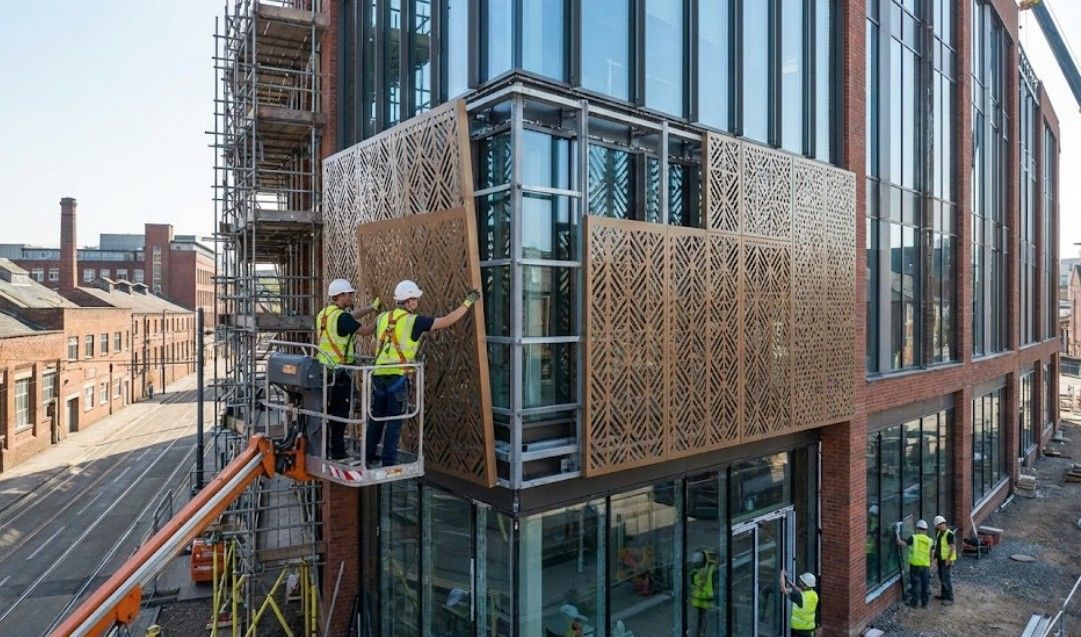
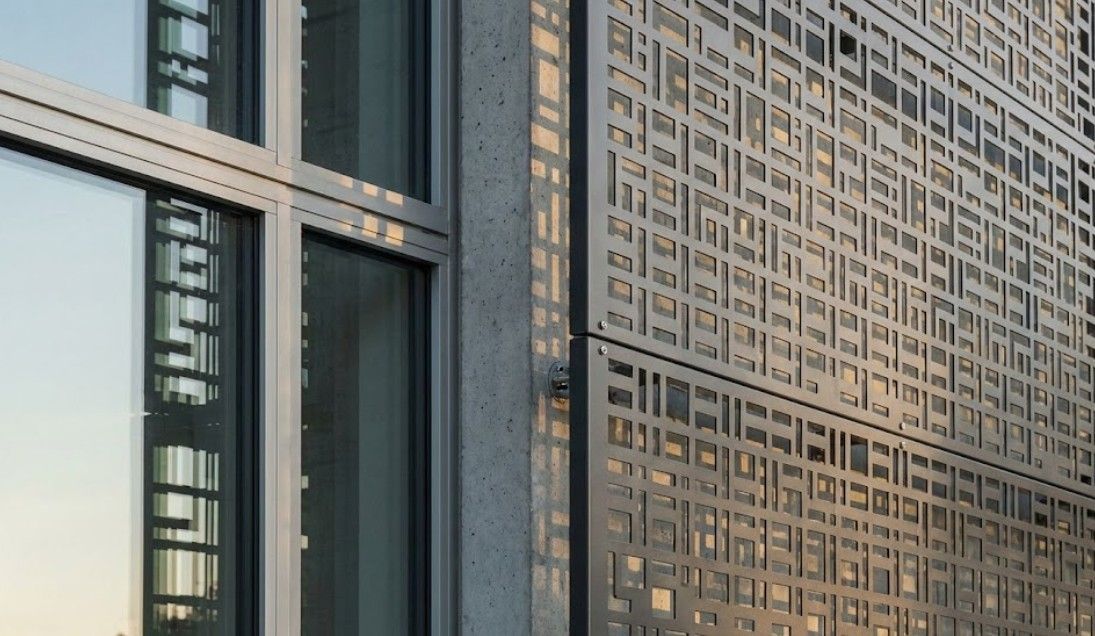
Building exteriors benefit from architectural metal panels adding texture, depth, and visual interest. We fabricate perforated metal cladding with custom patterns, decorative façade screens creating shadow effects, rainscreen cladding support systems, architectural feature panels highlighting entrances, and spandrel panels for curtain wall systems. Metal façade elements serve practical purposes - concealing services, providing weather protection, controlling solar gain - whilst contributing architectural character. Powder-coated finishes provide decades of maintenance-free performance in demanding exterior environments.
Privacy Screens & Dividers
Commercial and residential buildings require privacy solutions that don't create fortress-like barriers. We create balcony privacy screens with pattern density varying by height, terrace dividers separating adjoining properties, rooftop screen walls concealing mechanical equipment, courtyard screens defining outdoor spaces, and entrance feature screens providing security whilst welcoming visitors. Architectural screens balance privacy, ventilation, light transmission, and aesthetics through considered pattern design and material specification.
Ventilation Grilles & Louvers
Building services require ventilation whilst maintaining security and weather protection. We fabricate decorative ventilation grilles for mechanical systems, louver panels for natural ventilation, plant room screening concealing HVAC equipment, car park ventilation panels, and architectural vent covers integrating services discreetly. Technical performance—airflow requirements, weather resistance, security—combines with aesthetic considerations, creating functional architectural elements rather than utilitarian afterthoughts.
Entrance Features & Canopies
Building entrances establish identity and welcome visitors. We create architectural entrance screens and wind breaks, canopy support brackets and decorative elements, feature panels flanking doorways, building signage integrated with architectural metalwork, and security grilles that don't compromise aesthetics. Entrance metalwork receives intense scrutiny—it must withstand heavy use, weather exposure, and represent building quality prominently. Our fabrication and finishing ensure entrance features maintain appearance and function through demanding daily service.
Window Surrounds & Decorative Elements
Architectural detailing distinguishes quality buildings from basic construction. We fabricate window reveal panels and surrounds, spandrel panels between window bands, decorative architectural trim and copings, feature panels articulating building façades, and custom fixings and brackets for architectural elements. These details add richness to building elevations whilst often serving practical purposes like concealing fixings or protecting vulnerable junctions.
WORKING WITH ARCHITECTS & DEVELOPERS
Collaborative Architectural Fabrication
Sharing Ideas & Designs
Successful architectural metalwork requires collaboration between architects, fabricators, and installation teams. We engage early in design development, reviewing architectural drawings to advise on manufacturability, cost implications of design decisions, structural requirements, and installation methodology. Early engagement prevents costly redesigns and ensures architectural intent is achievable within project budgets.
Design Development Support
We work from architectural CAD drawings, translating design intent into fabrication specifications. For complex geometries or innovative designs, we develop samples and mock-ups for approval before committing to full production. Our manufacturing experience means we suggest refinements improving fabrication efficiency, structural performance, or installation simplicity without compromising architectural vision.
Material & Finish Specification
Architectural metalwork specifications must balance aesthetics, performance, and budget. We advise on mild steel versus stainless steel or aluminium choices, powder coating colours and finishes, perforation patterns achieving required transparency percentages, and weather-resistant specifications for demanding exposures. Our guidance ensures specified metalwork performs as architects anticipate whilst meeting building longevity expectations.
Regulatory Compliance
Architectural elements must meet building regulations. Balustrades require specific heights, spacing, and load resistance. Fire-rated assemblies need appropriate materials and construction. We manufacture to current Building Regulations, providing structural calculations where required, and coordinate with building control for compliant installations.
Multi-Trade Coordination
Architectural metalwork interfaces with glazing, cladding, structural steel, and building services. We coordinate with other contractors, ensuring our fabrication accommodates their requirements and installation sequences work logically. This coordination minimises site problems and ensures metalwork integrates seamlessly with overall building construction.
MATERIALS & FINISHES FOR ARCHITECTURAL APPLICATIONS
Specifying Metals for Building Environments
Mild Steel with Powder Coating
Most architectural metalwork uses powder-coated mild steel offering excellent durability at reasonable cost. Powder coating provides superior weather resistance compared to wet paint, with finishes lasting 15-20+ years in demanding exterior environments. Available in extensive RAL colour ranges, powder coating enables precise colour matching to architectural palettes. Textured finishes (fine texture, coarse texture, metallic effects) add depth and interest whilst concealing minor surface imperfections.
Stainless Steel
Premium architectural applications specify stainless steel for maintenance-free longevity and contemporary metallic aesthetics. Grade 316 suits coastal locations and aggressive urban environments, whilst 304 suffices for most applications. Finishes include brushed (satin), polished (mirror), and bead-blasted (matte). Stainless steel suits high-traffic areas, prominent features, and situations where long-term appearance maintenance is critical.
Aluminium
Large façade panels and applications requiring minimal structural loading benefit from aluminium. Powder-coated aluminium provides excellent corrosion resistance with significantly reduced weight compared to steel. Marine-grade aluminium alloys suit coastal exposures. Anodised finishes offer alternative aesthetic options for architectural detailing.
Corten & Weathering Steel
Contemporary architecture increasingly embraces Corten steel's distinctive rust patina. The controlled oxidation creates warm, organic colouration whilst protecting underlying metal. Corten suits feature panels, entrance elements, and artistic architectural details where the rustic aesthetic complements building design. Note that weathering runoff requires consideration for adjacent materials.
FABRICATION & INSTALLATION SERVICES
Complete Architectural Metalwork Solutions
We provide complete fabrication and installation services for architectural projects. Large panels and complex assemblies are manufactured in our Nottingham workshop under controlled conditions, ensuring quality impossible with site fabrication. Components arrive ready to install, reducing site time and weather exposure. Our installation team understands building construction sequencing, working alongside other trades to integrate metalwork efficiently. We handle fixing specifications, structural connections, weatherproofing details, and final adjustments ensuring architectural metalwork performs as designed. For complex projects, we offer site surveys and templating, confirming as-built dimensions before fabrication begins. This verification prevents costly errors and ensures manufactured metalwork fits building openings and mounting points precisely.
COMMISSIONING ARCHITECTURAL METALWORK
Starting Your Architectural Project
Commissioning architectural metalwork begins with sharing your drawings and project requirements. We review architectural details, discuss material and finish specifications, provide budget estimates for feasibility, and advise on fabrication and installation timescales. For architects and developers, we work within your procurement processes, providing formal quotations, shop drawings for approval, and coordinating with main contractors. For private clients, we guide you through specification decisions ensuring your architectural vision is realised within budget. Architectural fabrication timeframes typically range from 4-8 weeks for straightforward projects to several months for complex developments requiring staged installation. We'll provide realistic schedules coordinated with your construction programme.
Architectural Metalwork in Nottingham
Ready to discuss your architectural metalwork project?
Call: 0115 647 6611
Serving architects, developers, and contractors across Nottingham, Nottinghamshire, and the East Midlands. Explore our decorative metal art and [sheet metal fabrication services.
