
Metal Garden Benches Nottingham
Bespoke Outdoor Seating Combining Steel or Aluminium Frames with Wood or Composite
Metal Garden Benches
Nottingham Metalworks handcrafts bespoke metal garden benches for outdoor dining and relaxation across Nottingham and Nottinghamshire. Our custom-built benches combine robust steel or aluminium frames with quality timber or composite seats and backs, creating weather-resistant outdoor seating that provides comfort and style for decades of garden enjoyment.
Handcrafted Garden Benches Built for Comfort & Longevity
Garden benches serve multiple purposes—practical dining seating, comfortable garden retreats, entrance features welcoming visitors, and focal points anchoring planting schemes. Yet mass-produced benches consistently disappoint: lightweight construction lacks stability, materials degrade after seasons, and ubiquitous designs offer no character or distinction.
At Nottingham Metalworks, we fabricate bespoke metal garden benches combining engineering-grade construction with comfortable, beautiful seating. Robust steel or aluminium frames provide permanent structural integrity—benches that remain solid and stable year after year. Timber or composite seats and backs offer comfortable surfaces suited to outdoor exposure, maintaining appearance whilst developing character through decades of use.
Our garden benches suit diverse applications and garden styles. Backless dining benches pair with garden tables for flexible entertaining. Backed benches create comfortable garden seating for reading, contemplation, or enjoying morning coffee. Entrance benches welcome visitors whilst providing practical spots for removing muddy boots or resting shopping. Tree benches encircle specimen trees, creating contemplative seating in garden centres. Every bench is fabricated to your specifications—sized for your space, styled for your aesthetic, and built to withstand British weather.
The combination of metal frames with natural or composite materials offers compelling advantages. Metal frames won't rot, collapse, or deteriorate—the structural failures common in all-timber benches. Timber or composite seating provides comfort without becoming uncomfortably hot like solid metal benches in summer sun. And the robust construction supports cushions beautifully, allowing seasonal styling whilst remaining attractive year-round when cushions are stored.
We create garden benches for Nottingham homeowners who value outdoor living spaces, appreciate quality craftsmanship, want furniture that improves rather than deteriorates with age, and prefer investing in permanence over repeatedly replacing disposable furniture. Our benches become cherished garden features—places where families gather, where quiet mornings begin, and where gardens are truly lived in rather than merely maintained.
GARDEN BENCH TYPES & APPLICATIONS
Benches for Dining, Seating & Garden Features
Dining Benches
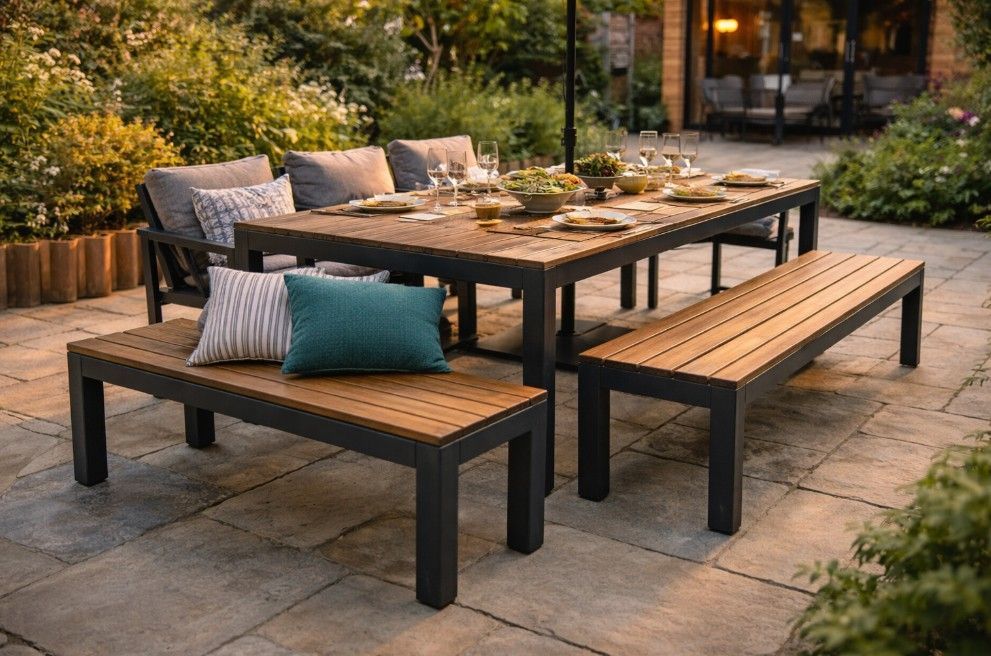
Backless or low-backed benches provide flexible seating for outdoor dining. We fabricate dining benches from 1.2 metres (seating 2-3 people) through 2.4+ metres (accommodating 5-6 people). Bench seating offers advantages over individual chairs—more people fit comfortably around tables, children can squeeze together during family gatherings, and benches tuck completely under tables when not in use, freeing patio space. Dining bench height (typically 0115 647 6611mm) coordinates with standard table heights, ensuring comfortable dining posture. Many clients commission matching benches with garden tables creating cohesive dining sets with consistent materials and finishes.
Backed Garden Benches
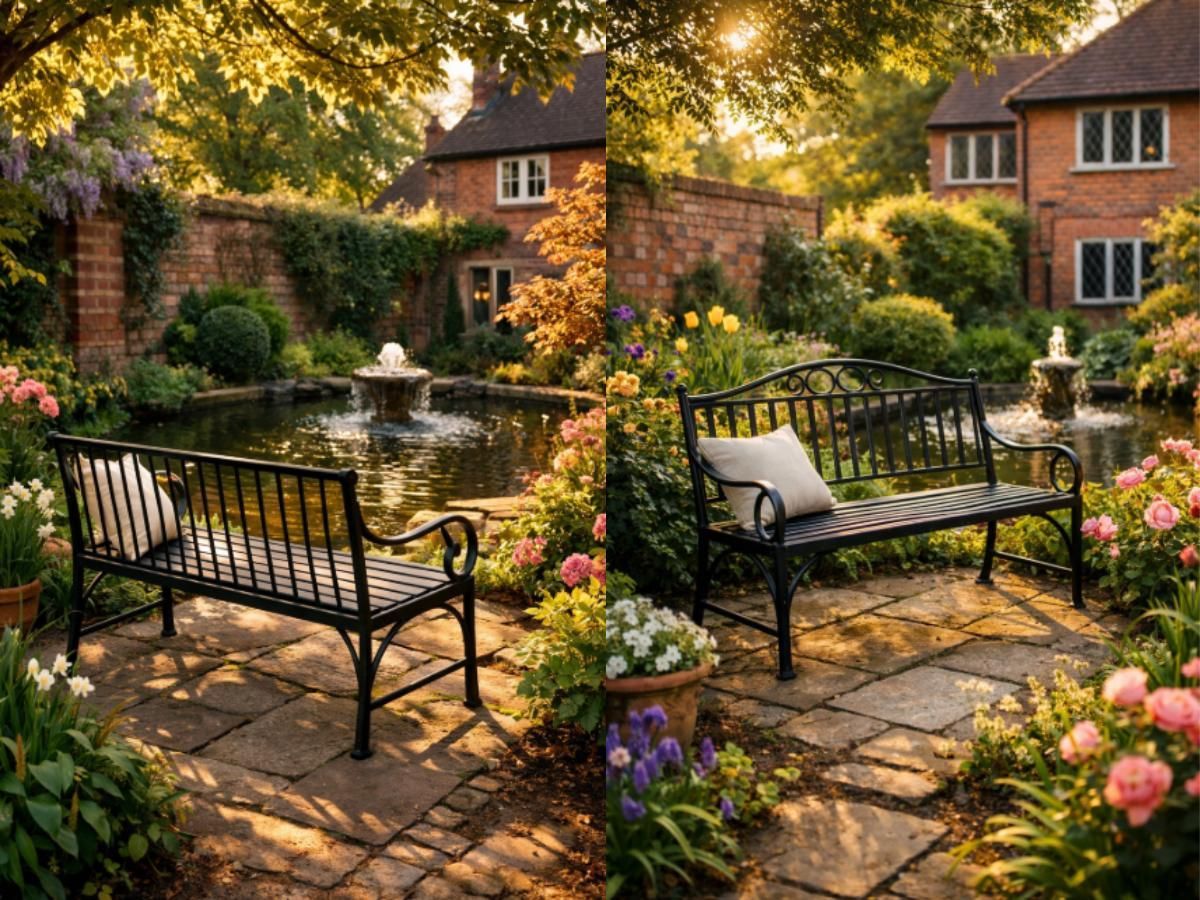
Comfortable backed benches transform gardens into true outdoor living spaces. We create benches with angled backs providing ergonomic support for extended sitting—perfect for reading, enjoying morning tea, or simply contemplating your garden. Typical lengths range from 1.2 metres (intimate two-seater) through 0115 647 6611 metres (generous three-seater). Back heights and angles are designed for comfort—sufficient support without feeling throne-like or formal. Backed benches become destination seating in gardens, encouraging you to actually use outdoor spaces rather than merely maintaining them.
Entrance & Pathway Benches
Practical entrance benches serve multiple functions—welcoming visitors, providing spots to remove muddy boots, resting shopping whilst unlocking doors, or simply adding architectural interest to doorways. These benches are often more compact 0115 647 6611m length) suiting typical entrance areas. Backless designs maintain clean lines, whilst low-backed versions provide subtle support. Positioned flanking doorways or along pathways, entrance benches combine functionality with aesthetic enhancement, making arrivals more gracious and departures more organised.
Tree Benches & Garden Features
Benches encircling specimen trees create contemplative garden features whilst providing 360-degree seating taking advantage of dappled shade. We fabricate hexagonal or octagonal tree benches surrounding mature trees, creating focal points in lawn or border areas. Garden benches can also be positioned strategically throughout larger gardens—beside ponds for watching wildlife, overlooking attractive views, or in sunny corners for afternoon reading. These benches become integral garden features rather than moveable furniture.
Corner & L-Shaped Benches
Maximising awkward spaces or creating defined outdoor rooms benefits from corner or L-shaped bench configurations. These designs turn corner locations into functional seating areas, providing substantial capacity without occupying excessive linear space. L-shaped benches work particularly well on corner patios, in courtyard gardens, or defining outdoor dining areas. Custom fabrication makes complex geometries practical and economical.
MATERIALS & CONSTRUCTION
Premium Materials for Outdoor Comfort
Metal Frame Construction
Steel Frames
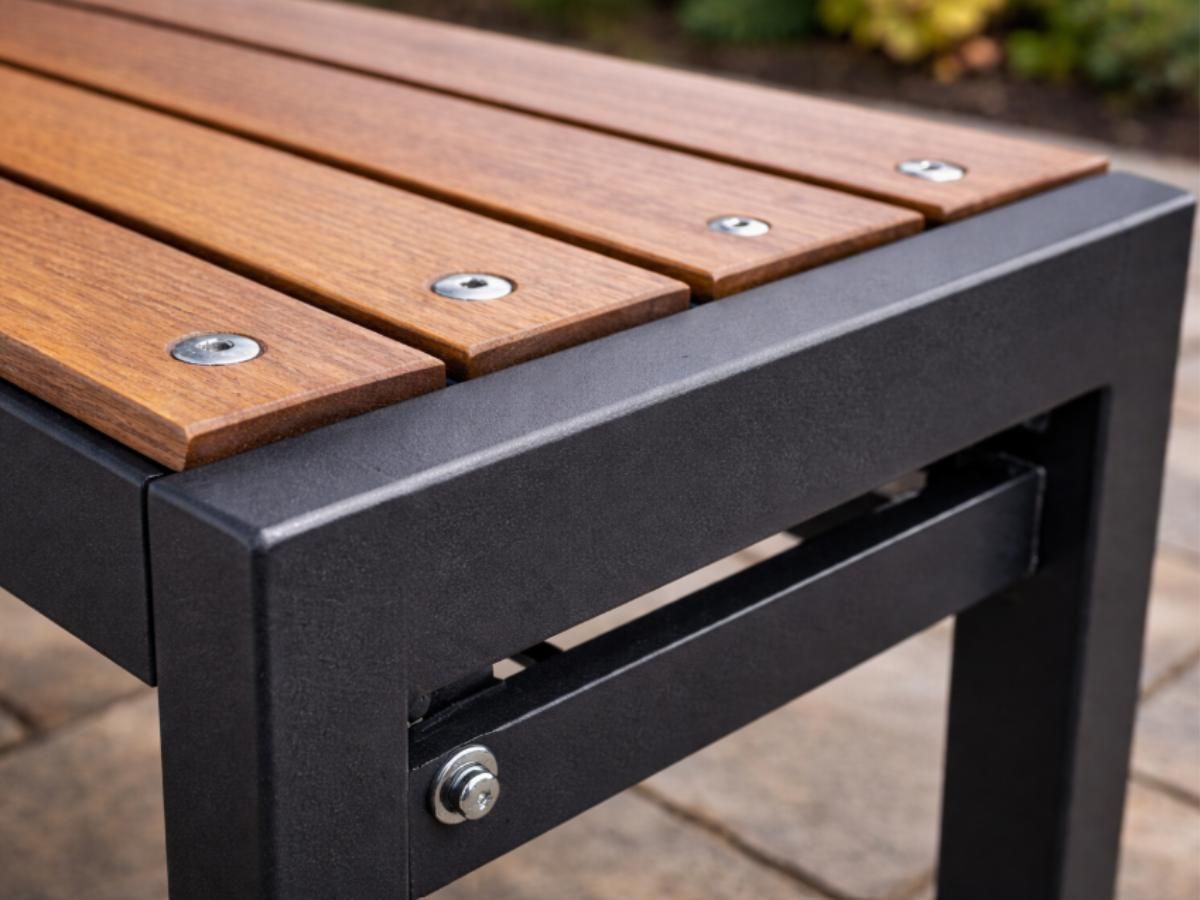
Substantial steel box sections (typically 40x40mm or 50x50mm) create robust bench frames providing permanent structural integrity. We use appropriately-sized sections ensuring benches remain rigid—even 2+ metre spans don't flex or wobble when multiple people sit. Steel frames are blast-cleaned and powder-coated in extensive colour ranges including charcoal grey for contemporary aesthetics, bronze tones complementing natural timber, sage or olive greens integrating with garden planting, and classic black providing timeless elegance. Powder coating delivers 15-20 years of weather resistance.
Aluminium Frames
Lightweight aluminium suits benches that might occasionally reposition—moved to follow sun, shifted for garden maintenance, or relocated seasonally. Aluminium benches weigh approximately 60% less than steel equivalents whilst providing similar structural performance. Coastal gardens benefit from aluminium's corrosion resistance—scratched powder coating doesn't expose rust-prone metal underneath. Despite reduced weight, appropriately-sized aluminium frames deliver equivalent stability and longevity.
Seating Materials
Hardwood Seats & Backs
Premium hardwoods create beautiful, comfortable seating developing attractive patina through outdoor exposure. European oak provides traditional beauty with exceptional durability—rich grain patterns and timber that serves decades. Oak weathers naturally to silvery-grey or maintains golden tones with occasional oiling. Iroko resists moisture naturally, maintaining warm brown tones without treatment. Hardwood slats attach through stainless steel fixings, with spacing (typically 8-12mm gaps) permitting drainage and accommodating timber movement. Slat curvature can be incorporated in backrests, enhancing ergonomic comfort.
Treated Softwood
Pressure-treated pine or larch offers economical natural beauty. Modern treatments provide excellent rot resistance whilst softwood's lighter colour and prominent grain create appealing aesthetics. Softwood accepts stains readily, enabling colour customisation. Annual treatment maintains protection and appearance. Whilst less dense than hardwoods, quality treated softwood provides 10-15 years of service, suiting budget-conscious projects or those wanting regular refinishing flexibility.
Composite Seating
Wood-composite materials combine recycled wood fibres with polymer binders, creating maintenance-free seating. Composite slats won't rot, splinter, fade, or require treatment—maintaining appearance indefinitely with only occasional washing. Available in realistic wood-effect finishes from contemporary greys to traditional timber tones. Composites suit clients prioritising convenience over timber's authentic character. The consistent material properties mean no seasonal movement or variation—seating surfaces remain uniformly smooth year-round.
COMFORT & ERGONOMIC DESIGN
Creating Comfortable Garden Seating
Bench comfort depends on thoughtful dimensional design. Seat height (typically 0115 647 6611mm for dining, 0115 647 6611mm for relaxed seating) ensures comfortable sitting and rising. Seat depth 0115 647 6611mm) accommodates varied users without forcing awkward postures. Backrest angles (typically 0115 647 6611 degrees) provide comfortable support without excessive recline.
We design benches considering intended use. Dining benches prioritise slightly upright postures maintaining comfortable meal positions. Garden seating benches allow more relaxed angles encouraging extended sitting. Entrance benches balance practical perching with brief comfortable sitting.
Timber and composite materials remain comfortable across temperature ranges—unlike solid metal seating becoming uncomfortably hot in sun or cold in shade, wood and composite materials maintain moderate temperatures. This makes benches genuinely useable throughout seasons rather than furniture too uncomfortable to actually use.
WHY CHOOSE BESPOKE GARDEN BENCHES
Permanent Quality vs Disposable Seating
Mass-produced benches fail predictably: lightweight construction wobbles and tips, materials degrade within seasons, and identical designs lack any distinction. Our bespoke metal benches provide robust frames lasting decades, seating that develops character or maintains appearance permanently, and unique designs sized perfectly for your specific applications.
Quality garden benches transform outdoor spaces from areas you maintain into places you actually inhabit. The investment proves economical long-term—decades of reliable service without replacement represents genuine value compared to repeatedly purchasing disposable alternatives.
COMMISSIONING YOUR GARDEN BENCH
Creating Your Custom Bench
Commissioning bespoke garden benches begins with discussing your requirements—intended use (dining, garden seating, entrance), dimensions and capacity, material preferences, and style. We'll suggest bench configurations suited to your applications, explain material options and maintenance, and provide detailed quotations.
For benches coordinating with existing outdoor tables, or other outdoor features send in photos or we can visit to ensuring perfect matching. Fabrication typically takes 2-3 weeks depending on material specifications. Many clients commission complete dining sets - table with matching benches - creating cohesive outdoor furniture with consistent design, materials, and finishing
Metal Garden Benches in Nottingham
Ready to create your bespoke garden bench?
Call: 0115 647 6611
Serving Nottingham, Nottinghamshire, and the East Midlands. Handcrafted outdoor benches combining metal frames with timber or composite. Explore our garden tables and outdoor furniture.
